
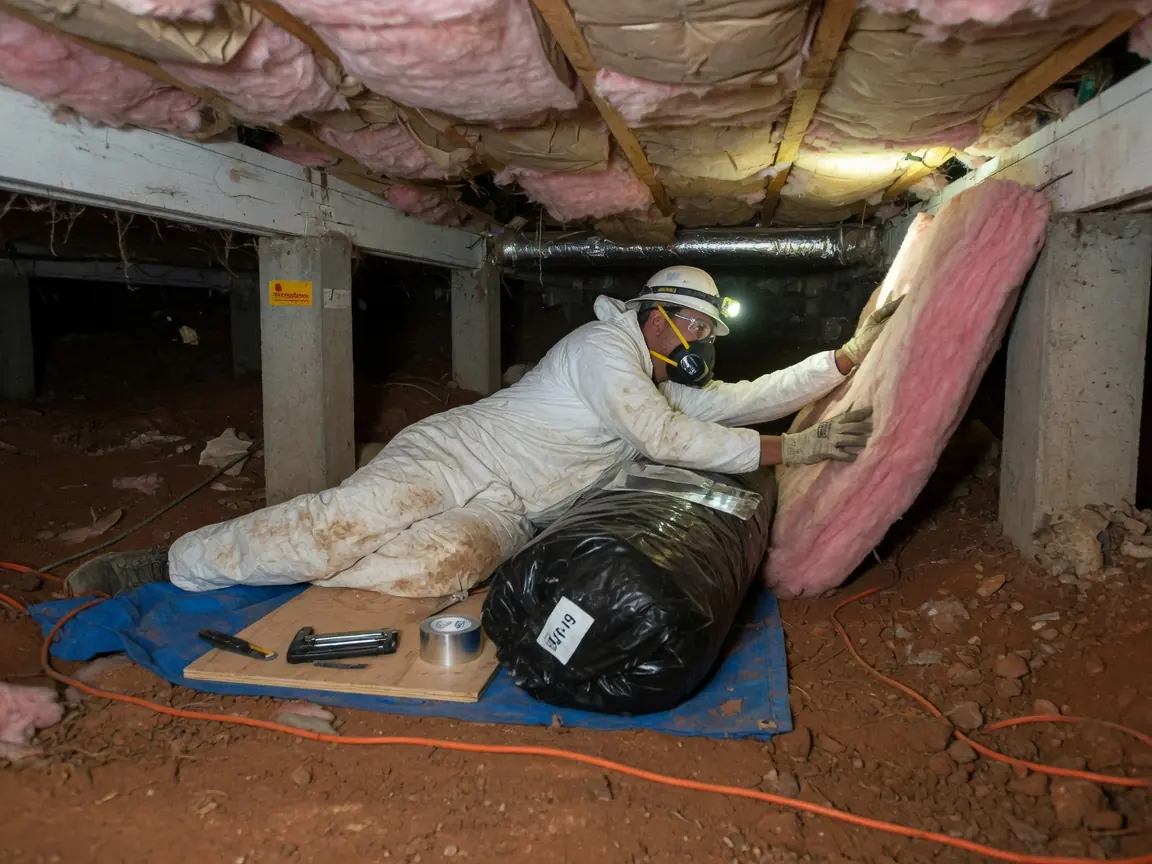
Many older homes around Tulsa, especially those built before the 1970s and in the midtown and north Tulsa neighborhoods, sit on vented crawl spaces. In July, those vents pull warm, humid Oklahoma air under the house, where it meets cooler ductwork and floor framing. The result is condensation, damp fiberglass hanging from the joists, musty smells and floors that feel cold all winter.
Building scientists and many building codes now favor a different approach: closing the vents, laying a heavy vapor barrier over the soil, and insulating the foundation walls and rim joists instead of the floor. Closed-cell spray foam is the go-to material for this because it does not absorb water, acts as a vapor retarder at about 1.5 inches, and seals the rim joist, which is one of the leakiest spots in any house.
Some homes are better served by insulating the underside of the floor, or by a simpler rim joist upgrade. We connect you with a local contractor who looks at your crawl space, drainage and ductwork, then gives you a free estimate for the approach that fits.
Tulsa tip
Fix drainage first. Gutters that dump next to the foundation and soil that slopes toward the house are the biggest sources of crawl space water in Tulsa. Insulation cannot solve standing water.
Signs Your Crawl Space Needs Insulation
- ✓Cold floors in winter, especially over the crawl space
- ✓Fiberglass batts sagging or falling from the floor joists
- ✓Musty odors in the house after rain
- ✓Condensation on ductwork or pipes under the house
- ✓High indoor humidity in summer even with the AC running
- ✓Rodent or insect activity in the crawl space
Encapsulation vs Floor Insulation
Sealing and insulating the crawl space walls treats the crawl space as part of the home. Vents are closed, a 10 to 20 mil vapor barrier covers the ground and runs up the walls, and closed-cell foam is applied to the foundation walls and rim joists. Many homes also need a dehumidifier or a small amount of conditioned air to keep humidity in check. This approach protects ductwork and plumbing and usually gives the biggest comfort improvement.
Insulating the underside of the floor keeps the crawl space vented and puts the insulation between the crawl space and the living area. Closed-cell foam sprayed between the floor joists works far better than fiberglass batts here because it will not sag or soak up moisture, but ducts and pipes remain outside the insulated area. It can make sense for homes with no ductwork under the floor or where encapsulation is not practical.
Crawl Space Insulation Services We Offer
✓Rim Joist Sealing
Closed-cell foam at the band joist to stop one of the biggest air leaks in the house.
✓Foundation Wall Insulation
Closed-cell foam on crawl space walls as part of a sealed, encapsulated crawl space.
✓Underfloor Spray Foam
Closed-cell foam between floor joists for vented crawl spaces.
✓Vapor Barrier and Encapsulation
Heavy ground liner, sealed seams and closed vents to keep soil moisture out.
✓Old Insulation Removal
Removal of wet, moldy or fallen fiberglass batts before new work begins.
Crawl Space Insulation Cost in Tulsa, OK
| Project | Typical Range | What Affects It |
|---|---|---|
| Rim joist sealing only | $600–$1,800 | Perimeter length, access, debris |
| Walls and rim joists, closed-cell 2 in (typical 1,500 sq ft home) | $1,500–$3,500 | Wall height, crawl clearance |
| Underfloor closed-cell 2–3 in (per 1,000 sq ft) | $2,000–$6,000 | Joist spacing, ductwork, clearance |
| Full encapsulation with liner and dehumidifier | $5,000–$15,000 | Drainage needs, liner thickness, equipment |
Planning ranges based on typical market pricing. Your contractor's written quote after a crawl space inspection is the price that counts. Call for a free estimate on your project.
How It Works
- 1
Crawl Space Inspection
The contractor checks moisture, drainage, ductwork, vents, existing insulation and any pest or mold issues.
- 2
Cleanup and Prep
Debris and failed insulation are removed and surfaces are dried as needed.
- 3
Foam and Barrier Installation
Closed-cell foam is applied to rim joists and walls or the floor underside, and a vapor barrier is installed where specified.
- 4
Final Check
Coverage, seams and moisture readings are reviewed with you after the work is complete.