
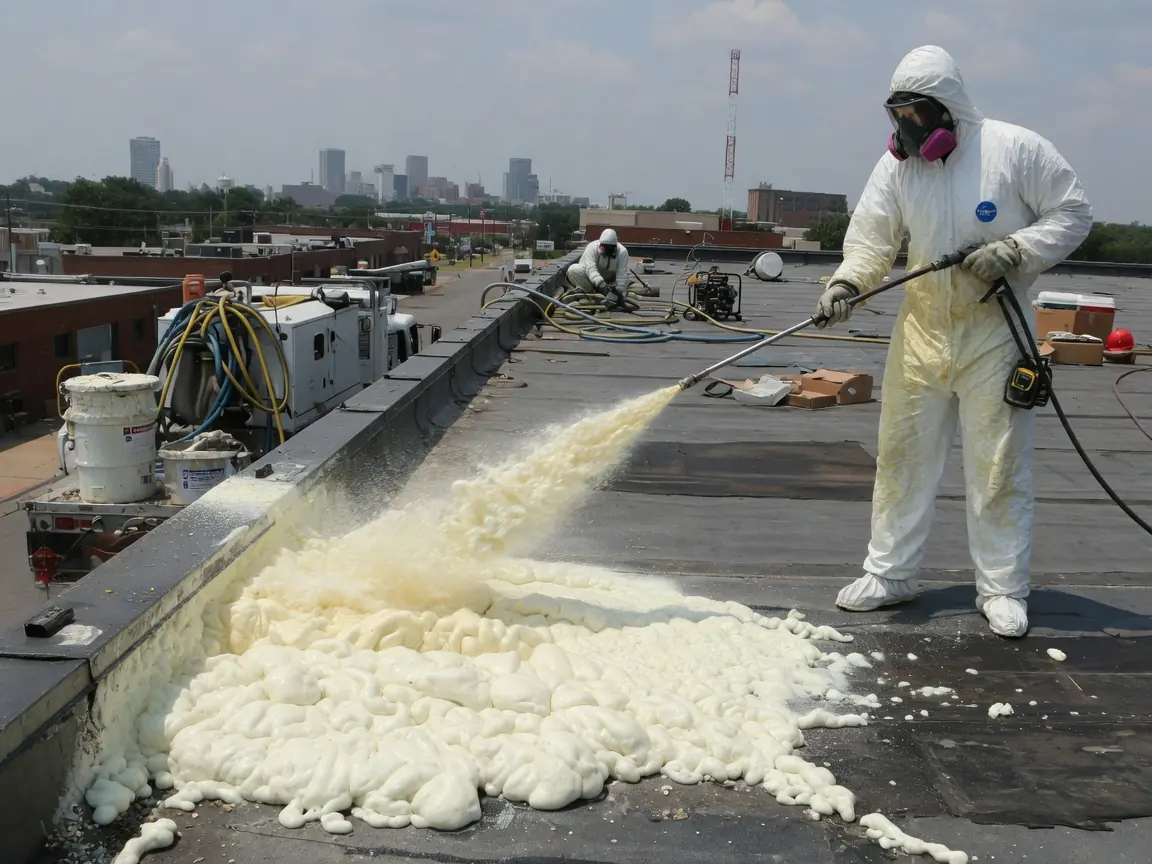
Spray polyurethane foam roofing, often called SPF roofing, is a seamless roofing system used mainly on flat and low-slope commercial buildings. A high-density closed-cell foam is sprayed onto the existing roof or deck, where it expands, fills low spots and forms a monolithic layer with no seams. A protective elastomeric coating, usually silicone or acrylic, is then applied on top to shield the foam from UV light and weather.
For Tulsa building owners, foam roofing offers two big advantages. It adds continuous insulation above the deck, which cuts heat gain through the roof during long Oklahoma summers. It can also often be installed over an existing roof after repairs and moisture testing, which avoids a costly tear-off and keeps the building in use during the project.
Foam roofing is not right for every building, and installation quality matters a great deal. We connect you with a local contractor who handles roof coatings and SPF systems, inspects your current roof and gives you a free estimate for repair, recoat or a new foam roof.
Tulsa tip
Ask for an infrared or core-sample moisture survey before foam goes over an existing roof. Wet insulation trapped under a new foam roof can cause blistering and deck damage.
When Spray Foam Roofing Is a Good Fit
- ✓Flat or low-slope roofs on warehouses, retail centers, churches and schools
- ✓Built-up, modified bitumen or metal roofs with recurring leaks
- ✓Roofs with ponding water that needs to be sloped to drains
- ✓Buildings with high cooling costs and little insulation above the deck
- ✓Metal roofs with leaking fasteners and seams
- ✓Owners who want to avoid a full tear-off
Coatings, Thickness and Tulsa Weather
Roofing foam is denser than wall or attic foam, typically around 2.5 to 3 pounds per cubic foot, and is usually installed at least 1.5 inches thick. Many projects go thicker, around 2 to 3 inches or more, to add R-value and build slope toward drains. The topcoat is what protects the system, so coating type and thickness should be specified in writing.
Tulsa's spring hail and strong storms are a real consideration. Coated foam roofs can be damaged by large hail, but most damage is repairable with sealant and a fresh coat rather than a full replacement. Regular inspections, especially after severe weather, and a recoat every 10 to 20 years keep the roof watertight for decades.
Spray Foam Roofing Services We Offer
✓New SPF Roof Systems
Foam and elastomeric coating installed over a prepared deck or existing roof.
✓Roof Recoating
A fresh silicone or acrylic topcoat to extend the life of an existing foam roof.
✓Metal Roof Restoration
Foam and coatings to seal leaking seams and fasteners on metal roofs.
✓Ponding Water Correction
Tapered foam application to build slope toward drains.
✓Inspection and Repair
Post-storm inspections and repairs for hail and mechanical damage.
Spray Foam Roofing Cost in Tulsa, OK
| Project | Typical Range | What Affects It |
|---|---|---|
| New SPF roof with coating | $4.00–$7.00 per sq ft | Foam thickness, coating type, roof condition |
| Recoat of existing foam roof | $1.50–$3.00 per sq ft | Surface prep, coating type and thickness |
| Metal roof restoration with foam | $3.50–$6.50 per sq ft | Panel condition, fastener repairs |
| Repairs after storm damage | Quoted per project | Extent of damage, access |
Planning ranges based on typical market pricing for SPF roofing. Your contractor's written quote after a roof inspection is the price that counts. Call for a free estimate on your project.
How It Works
- 1
Roof Inspection
The contractor inspects the roof, checks for trapped moisture and reviews drainage and deck condition.
- 2
Prep
Wet or damaged materials are removed, surfaces are cleaned, and edges, drains and penetrations are prepared.
- 3
Foam and Coating
Foam is sprayed to the specified thickness and slope, then coated in one or more passes.
- 4
Final Inspection
Thickness, coverage and drainage are checked and maintenance guidance is provided.