
On a 100°F Tulsa afternoon, a vented attic with thin or settled insulation can climb past 140°F. Most homes in the area also have their furnace, air handler and ductwork in that attic, so the HVAC system ends up pushing cooled air through ducts sitting in an oven. Every leaky duct joint, recessed light and top plate gap pulls that heat and humidity toward the living space below.
Attic insulation in Tulsa comes down to two proven approaches. Spray foam applied to the underside of the roof deck turns the attic into a sealed, semi-conditioned space, so the ducts stay close to indoor temperature and the attic air seal is done in the same step. Blown-in insulation on the attic floor keeps the attic vented and adds depth above the ceiling, which is cheaper and works well when the ducts are not in the attic or are already in good shape.
When you call, we connect you with a local insulation contractor who inspects your attic, checks the roof decking, ventilation, wiring and existing insulation, then explains which approach fits your home and budget. You get a free estimate in writing before any work starts.
Tulsa tip
If bathroom or kitchen exhaust fans in your home dump into the attic instead of venting through the roof, have them rerouted before any insulation goes in. It is one of the most common causes of damp insulation and roof deck mold in Tulsa attics.
Signs Your Attic Insulation Needs Attention
- ✓Upstairs rooms or bonus rooms that stay several degrees warmer than the rest of the house in summer
- ✓Insulation that sits level with or below the ceiling joists (usually under R-19)
- ✓Summer electric bills that jump even though the AC is running constantly
- ✓Dust streaks on carpet edges or around ceiling vents, which point to air leaks
- ✓Ice dams or frost on roof nails during cold snaps
- ✓Musty smells, damp batts or rodent droppings in the attic
Spray Foam vs Blown-In for Tulsa Attics
Open-cell spray foam on the roof deck is the most common choice for Tulsa attics that hold the HVAC system. It seals the soffit, gable and ridge vents as building code allows, so the attic becomes part of the home's thermal envelope. At about R-3.5 to R-3.8 per inch, roughly 5.5 to 7 inches is typical on the roof deck. Closed-cell foam costs more, but packs more R-value per inch and can be a better fit for low-slope roofs, cathedral ceilings and bonus rooms with shallow rafters.
Blown-in fiberglass or cellulose stays on the attic floor and keeps the attic vented. The U.S. Department of Energy recommends R-30 to R-60 for attics in Tulsa's climate zone, which usually means 10 to 20 inches of loose fill. Air sealing the ceiling plane first, then blowing to R-38 or R-49, is a strong, budget-friendly upgrade when ducts are not in the attic.
Attic Insulation Services We Offer
✓Roof Deck Spray Foam
Open-cell or closed-cell foam on the underside of the roof sheathing to create a sealed, conditioned attic.
✓Old Insulation Removal
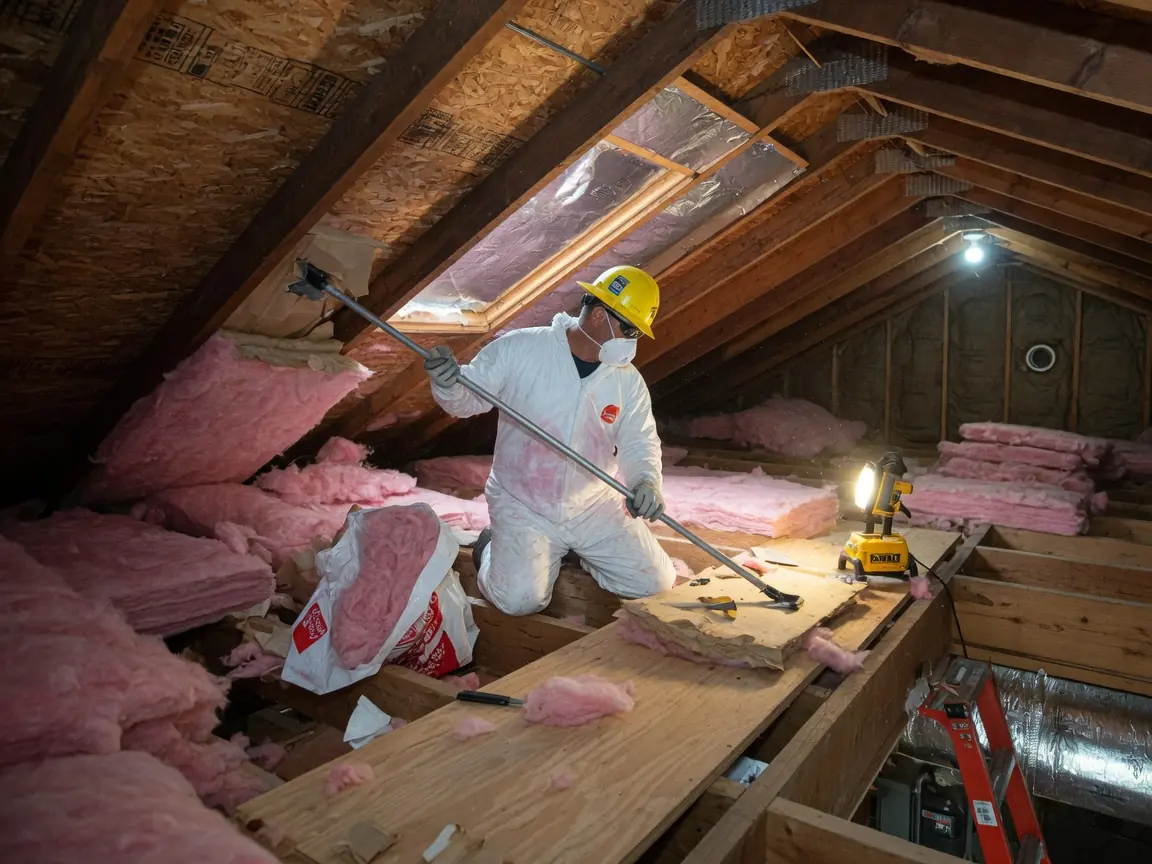
Vacuum removal of damp, compressed or rodent-contaminated batts and loose fill before new insulation goes in.
✓Attic Air Sealing
Sealing top plates, plumbing stacks, wiring holes, chases and recessed lights before blown-in insulation is added.
✓Blown-In Top-Up
Fiberglass or cellulose blown over existing insulation to reach R-38 or R-49 on the attic floor.
✓Bonus Room and Knee Wall Insulation
Foam on knee walls, slopes and floors over garages, the rooms that are hardest to keep cool in a Tulsa summer.
✓Ignition Barrier and Code Coatings
Intumescent coatings over exposed foam where local building code requires them.
Attic Insulation Cost in Tulsa, OK
| Project | Typical Range | What Affects It |
|---|---|---|
| Roof deck, ~1,000 sq ft, open-cell 5.5 in | $2,500–$4,400 | Roof pitch, access, number of hips and valleys |
| Roof deck, ~1,500 sq ft, open-cell 5.5 in | $3,700–$6,600 | Most single-story ranch homes fall near here |
| Roof deck, ~2,000 sq ft, open-cell 5.5 in | $5,000–$8,800 | Larger or two-story homes, bonus rooms |
| Closed-cell instead of open-cell | Add roughly 40–100% | Higher R per inch, vapor control, cost per board foot |
| Old insulation removal | $1.00–$2.00 per sq ft | Depth, contamination, attic access |
| Air sealing plus blown-in to R-38 | $1,500–$3,500 | Attic floor area, existing depth, baffles needed |
Planning ranges based on typical market pricing per board foot. Your contractor's written quote after an on-site measurement is the price that counts. Call for a free estimate on your project.
How It Works
- 1
Attic Inspection
The contractor checks insulation depth, ventilation, roof decking, bath fan terminations, wiring and signs of leaks or pests.
- 2
Prep and Removal
Old insulation is removed where needed, fans are rerouted, and living spaces below are protected.
- 3
Installation
Foam is sprayed to the specified depth in passes, or the ceiling is air sealed and blown-in insulation is added with baffles at the eaves.
- 4
Depth Check and Walkthrough
Depths are verified with a probe, the area is cleaned, and you walk through the finished attic.