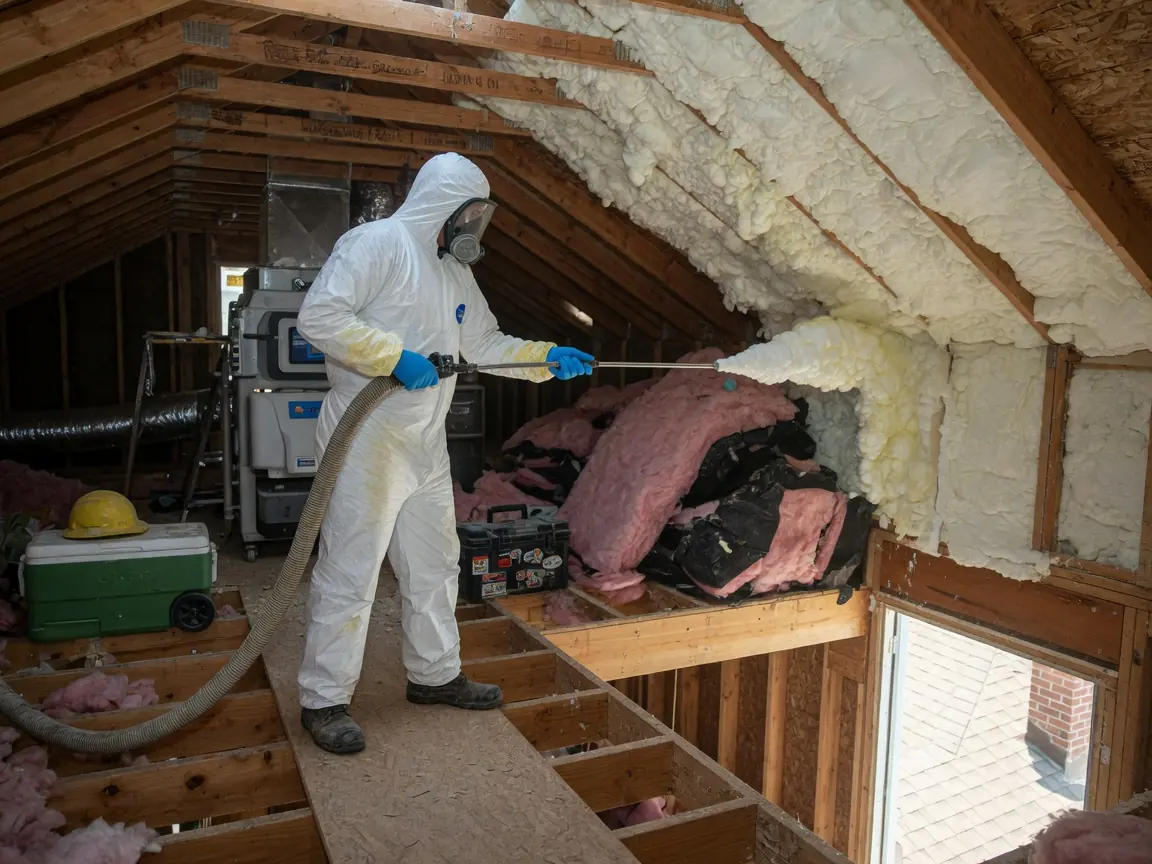
Tulsa, Oklahoma · Residential and Commercial
Spray Foam Insulation TulsaLocal Spray Foam Insulation Contractors for Homes and Businesses in Oklahoma
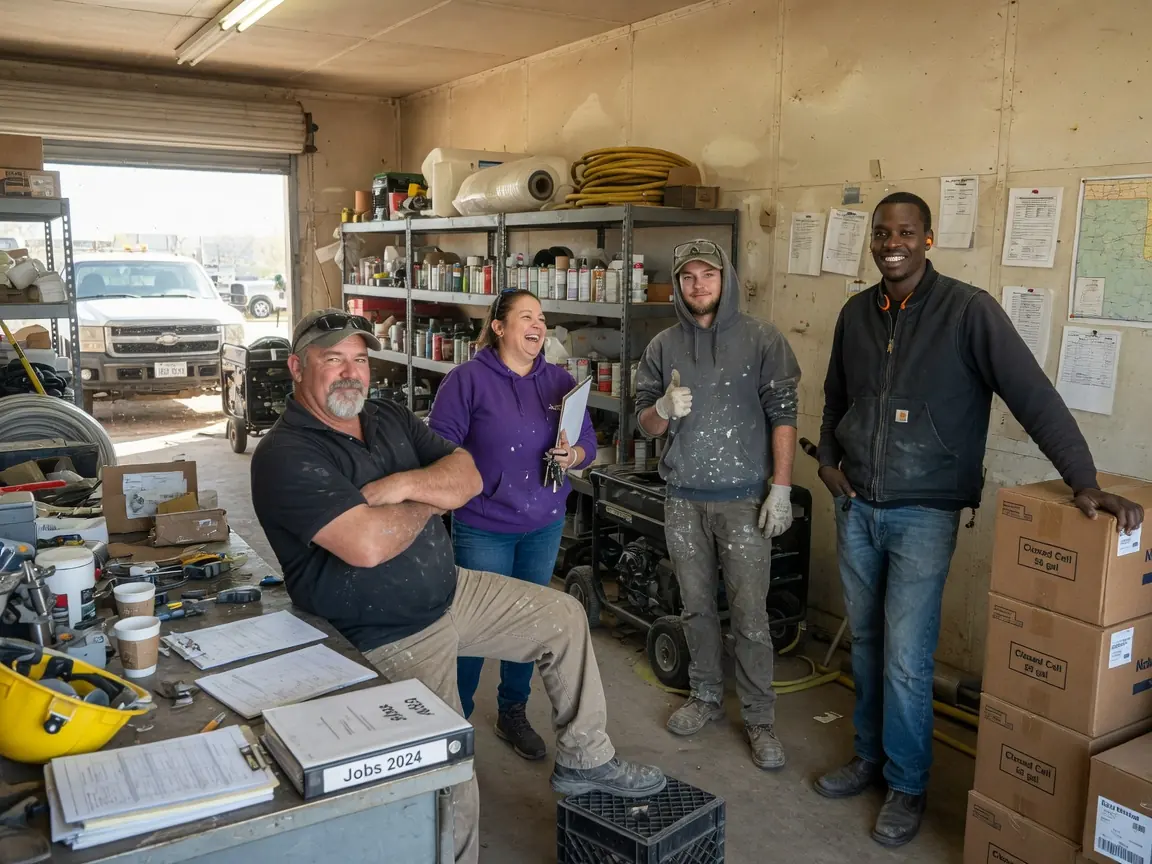
Owner Paul Williams and our crew install open-cell and closed-cell spray foam in attics, walls, crawl spaces and metal buildings. Every project is built around Tulsa's hot, humid summers, ice-storm winters and the energy bills that come with both.
- ✓Free estimates
- ✓Open-cell and closed-cell foam
- ✓Tulsa and surrounding areas
- ✓Open 7 days, 9am–7pm
Spray Foam Insulation in Tulsa
Insulation Solutions in Tulsa Built for Oklahoma Weather
Tulsa sits in climate zone 3A, a mixed-humid region where summer highs regularly push past 95°F, attic air can top 140°F, and winter ice storms test every gap in a building's shell. Standard fiberglass insulation slows heat flow but does little to stop air movement, so humid outdoor air, dust and drafts keep leaking through top plates, can lights, plumbing chases and rim joists. Spray foam provides the thermal resistance you expect from insulation plus the air seal that fiberglass lacks. It expands to fill cracks and gaps, bonds to framing, and creates an air seal and thermal layer in a single application.
Spray Foam Insulation Pros Tulsa is a locally owned insulation contractor run by Paul Williams. Paul and our crew handle everything from a single crawl space to comprehensive insulation solutions for a whole building. We inspect the space, explain whether open-cell or closed-cell foam fits, and give you a free estimate in writing before any work starts. You decide whether to move forward.
Whether your insulation needs involve a home or business, we focus on the projects that matter most for energy efficiency and comfort in Tulsa homes: sealing hot attics that hold the HVAC system and ductwork, insulating walls in new construction and additions, stopping moisture in crawl spaces, and controlling condensation in shops, pole barns and metal buildings across Oklahoma.

Paul Williams
Owner, Spray Foam Insulation Pros Tulsa
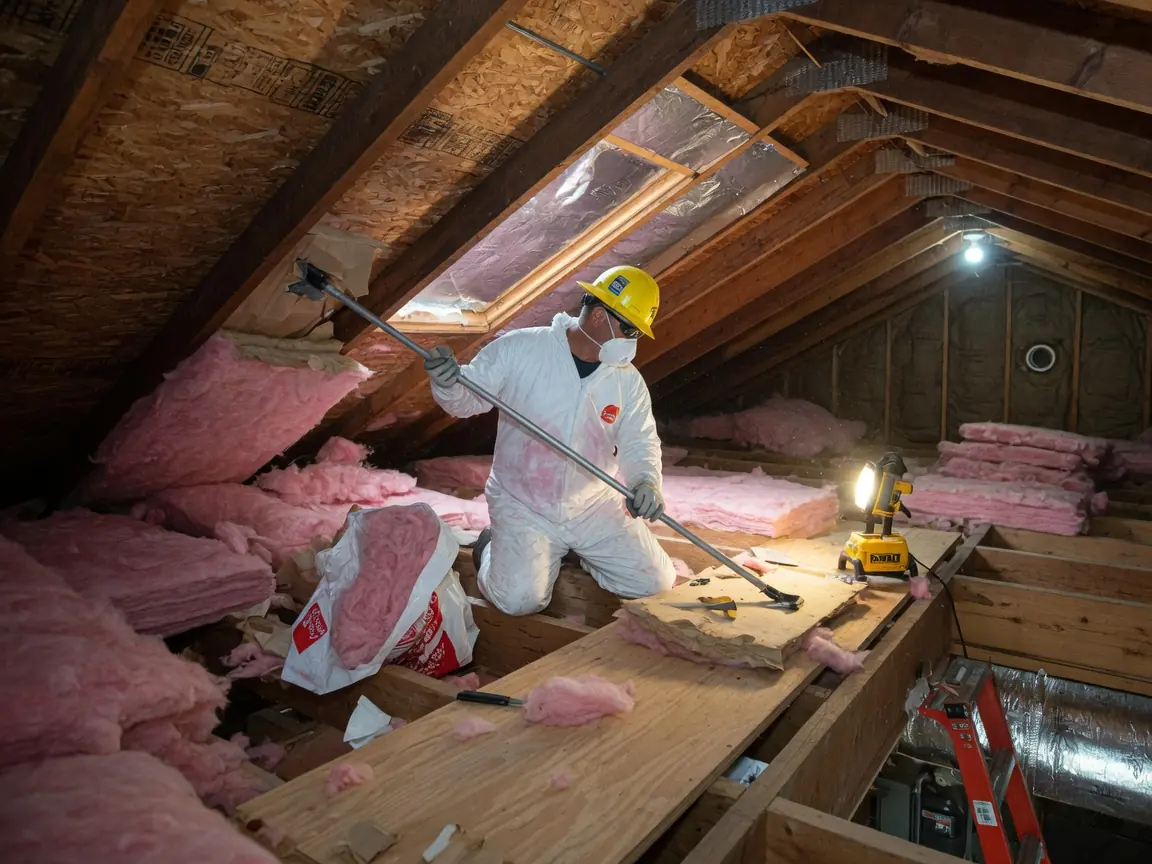
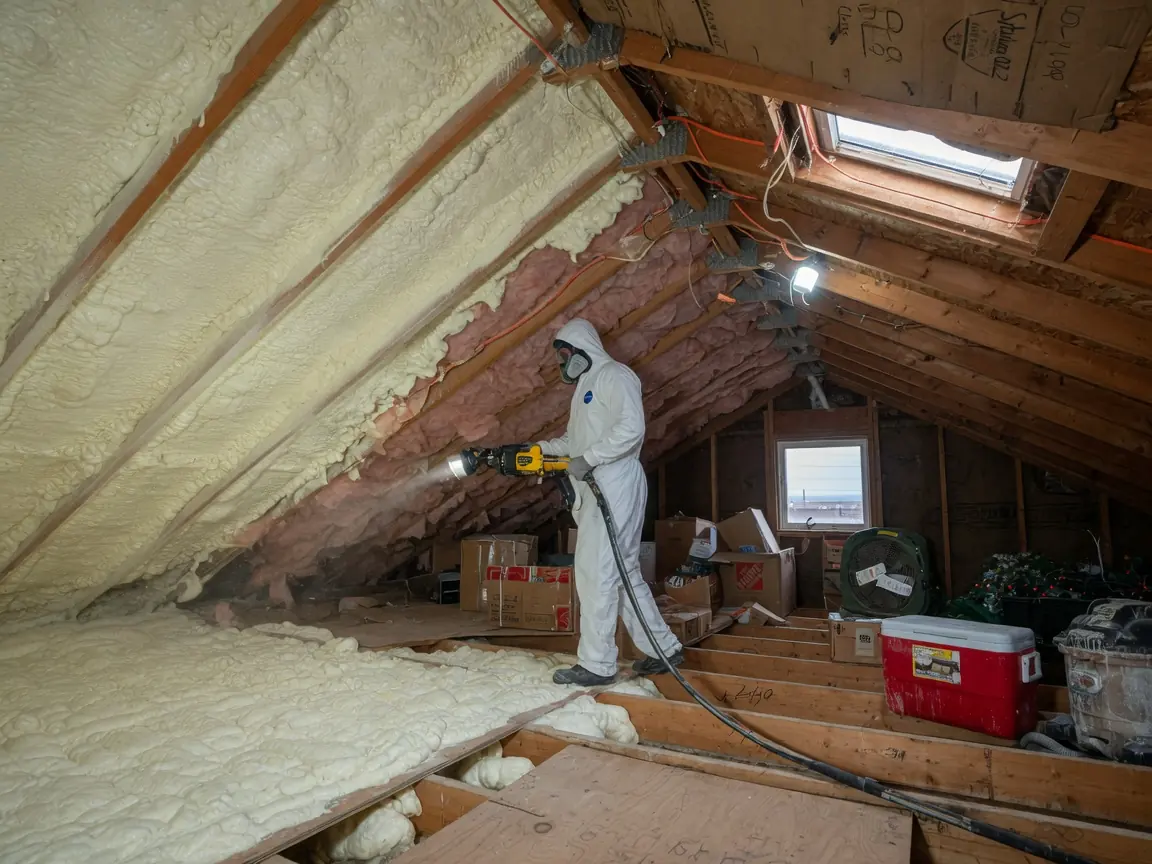
Spray foam applied to the underside of a roof deck creates a sealed, conditioned attic.
Insulation Services in Tulsa, OK
Free estimates on every project
01
Attic Insulation
Roof-deck spray foam that turns a 140°F attic into a sealed space, protecting the ductwork and HVAC system that sit up there in most Tulsa homes.
02
Wall Insulation
Open-cell or closed-cell foam for open stud cavities in new construction, additions and gut remodels, sealing outlets, top plates and window rough openings.
03
Crawl Space Insulation
Closed-cell foam on crawl space walls and rim joists to block damp air, cold floors and pests in older Tulsa homes built on pier and beam foundations.
04
Commercial Spray Foam Insulation
Commercial insulation for businesses in Tulsa, including warehouses, shops, offices and metal buildings where condensation, dripping roofs and high cooling loads drive up costs.
05
Spray Foam Roofing
Seamless foam roofing with a protective coating for low-slope commercial roofs, adding insulation and a continuous waterproof layer in one system.
06
Blown-In Insulation
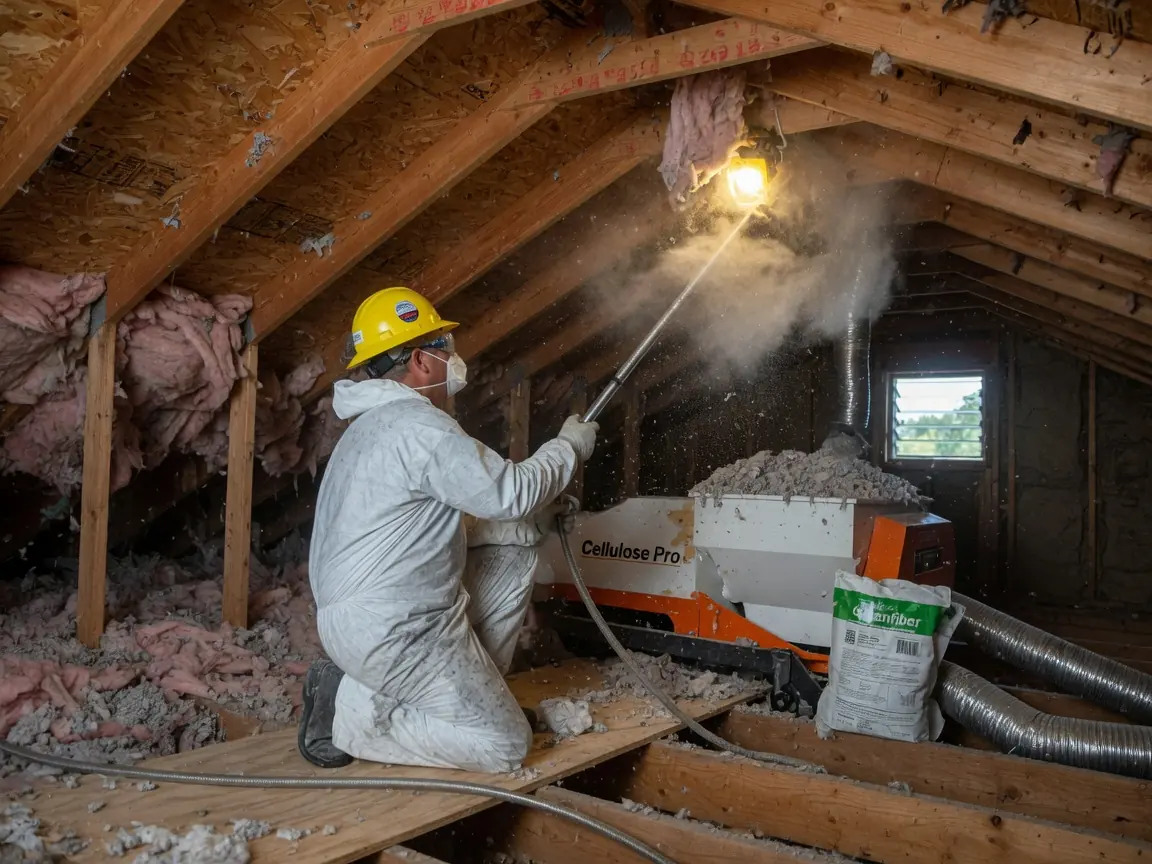
Blown-in fiberglass or cellulose for open attic floors when a budget-friendly top-up makes more sense than a full spray foam conversion.
7 Days
Open 9am to 7pm
11
Communities served
Up to R-7
Per inch, closed-cell foam
Free
Estimates and consultations
Why it works
Benefits of Spray Foam Insulation for Tulsa Homes
According to ENERGY STAR, sealing air leaks and adding insulation can cut heating and cooling costs by an average of about 15 percent. Spray foam does both jobs in one step, which is why it pays off so well in Tulsa's long cooling season. Quality insulation offers more than a lower bill: it can improve comfort in rooms that never seem to cool down and leave you with a more comfortable and energy-efficient home.
-
01
Air Sealing and Insulation in One
Open-cell spray foam expands to roughly 100 times its liquid volume, filling every gap around wiring, pipes and framing. Fiberglass batts leave small voids that let air bypass the insulation entirely.
-
02
Lower Energy Bills
When the attic is sealed, ductwork stays near indoor temperature instead of sitting in 140°F air. Your HVAC system runs shorter cycles, and energy savings show up through both summer and winter.
-
03
Humidity and Moisture Control
Closed-cell spray foam delivers a vapor retarder at about 1.5 inches and does not absorb moisture, making it the right choice for crawl spaces, rim joists and metal buildings that sweat.
-
04
Structural Strength
Dense closed-cell foam bonds to studs and roof decking and adds racking strength to walls and roofs, a real plus in a region known for high winds and spring storms.
-
05
Cleaner, Quieter Rooms
Fewer air leaks mean less dust, pollen and outdoor noise. Open-cell foam is especially good at dampening sound between rooms and from busy streets.
-
06
Fewer Pest Entry Points
Foam is not food and seals the small gaps insects and mice use to get inside. It is not rodent-proof on its own, so exterior openings still need proper exclusion.
Choosing the right foam
Open-Cell vs Closed-Cell Spray Foam
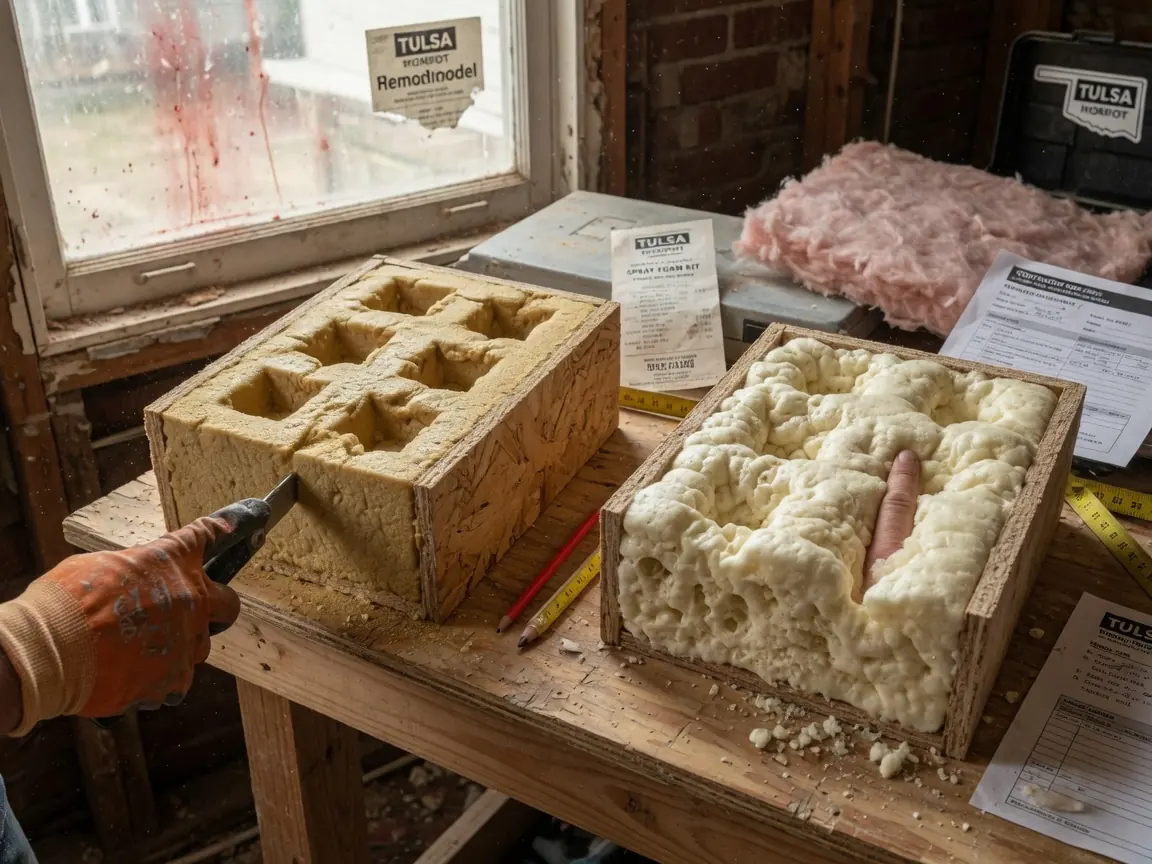
There is no single best spray foam insulation for every job. The right choice depends on where it goes, how much moisture the area sees, and your budget. Many Tulsa homes use both: open-cell foam on the roof deck and interior walls, closed-cell foam in the crawl space and on rim joists.
| Feature | Open-Cell Foam | Closed-Cell Foam |
|---|---|---|
| R-value per inch | About R-3.5 to R-3.8 | About R-6 to R-7 |
| Density | About 0.5 lb per cubic foot, soft and flexible | About 2 lb per cubic foot, rigid |
| Air barrier | Yes, at about 3.5 inches or more | Yes, at about 1 inch or more |
| Moisture | Vapor permeable and can absorb moisture | Vapor retarder at about 1.5 inches, resists water |
| Structural strength | Minimal | Adds racking strength to walls and roofs |
| Best Tulsa uses | Roof decks, interior walls, sound control | Crawl spaces, rim joists, metal buildings, below grade |
| Typical installed cost | About $0.45 to $0.80 per board foot | About $1.00 to $2.00 per board foot |
Ranges are typical market figures for planning only. Our written quote is the price that counts. Read more in our closed-cell vs open-cell guide.
Comparing your options
Spray Foam vs Fiberglass and Blown-In Insulation
Fiberglass batts run about R-3 to R-3.5 per inch and cost far less up front, but they only work when they fill a cavity perfectly. Any gap, compression or missing piece lets air move right past them, and air leaks are the main reason older Tulsa homes feel drafty in January and stuffy in July. If you are insulating your walls during a remodel, open stud cavities are the best chance to get a complete air seal.
Blown-in insulation is the budget-friendly way to add depth to an open attic floor. If your attic is easy to reach, the ductwork is in good shape, and you mainly need more R-value, a blown-in top-up to the R-38 to R-49 range is often the smart call.
Spray foam insulation costs more per square foot, yet it earns that cost where air sealing matters: attics with the HVAC system inside, cathedral ceilings, bonus rooms over garages, crawl spaces, and metal buildings. A good insulation contractor will tell you when blown-in or fiberglass insulation is enough instead of selling foam everywhere.
Pricing
How Much Does Spray Foam Insulation Cost in Tulsa?
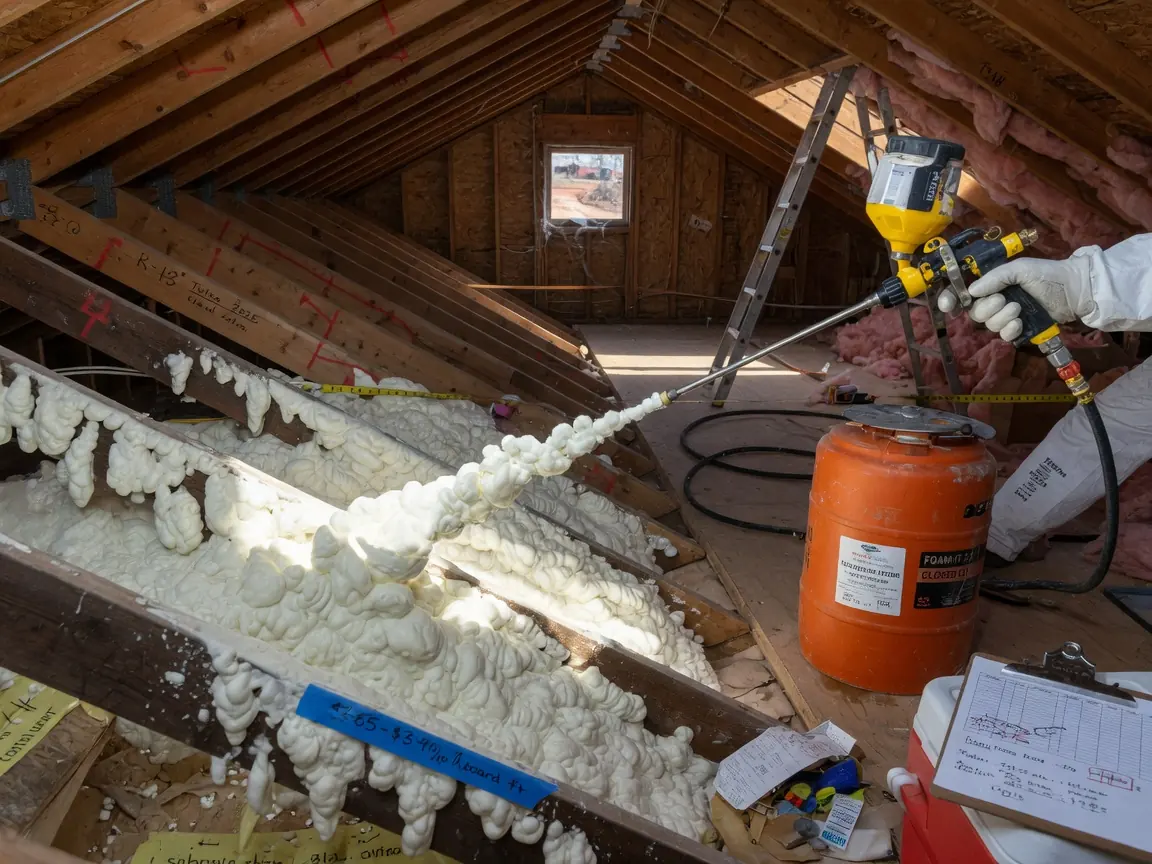
Spray foam is priced by the board foot, which is one square foot of surface at one inch thick. To estimate a job, multiply the square footage of the surface being sprayed by the planned thickness, then by the price per board foot. That surface is the roof deck, wall area or crawl space walls, not the floor area of the house.
For example, 1,000 square feet of roof deck sprayed with 5.5 inches of open-cell foam is 5,500 board feet, or roughly $2,500 to $4,400. The same area with 3 inches of closed-cell foam is 3,000 board feet, or roughly $3,000 to $6,000.
The biggest cost factors on projects across Tulsa are:
- Foam type and thickness needed to reach your target R-value
- Access, such as low-pitch attics, tight crawl spaces or high warehouse ceilings
- Removal of old or contaminated insulation before spraying
- Prep work like sealing soffit and ridge vents for an unvented attic
- Ignition or thermal barrier coatings where building code requires them
Why choose us
Why Tulsa Homeowners Choose Us
Picking a contractor from a list of search results is a gamble. Spray Foam Insulation Pros Tulsa is locally owned by Paul Williams, and our crew handles attics, walls, crawl spaces and commercial buildings every day.
-
01
Experience With Every Home Type
A 1940s bungalow in Brookside, a new build in Bixby and a metal shop in Owasso need different approaches. Our crew has insulated all of them and plans each job around the building.
-
02
Clear Quotes First
Start with a free consultation. We inspect the space and provide a free estimate showing foam type, thickness and areas covered before any work starts. No pressure to commit.
-
03
Honest Recommendations
Spray foam is not always the answer. If blown-in insulation or air sealing alone will meet your goals for less, that is the advice you should hear.
-
04
Open Seven Days a Week
Call any day from 9am to 7pm, including Saturdays and Sundays, to schedule a free estimate at a time that works for you.
Service area
Spray Foam Insulation Near Me: Tulsa and Surrounding Areas
We help homes and businesses throughout Tulsa, from midtown neighborhoods like Maple Ridge, Cherry Street and Brookside to growing suburbs throughout Tulsa County and Green Country. Older homes near downtown often need crawl space and attic air sealing, while newer construction in Jenks, Bixby and Owasso is a natural fit for spray foam during the build.
All service areasHow it works
What to Expect, Start to Finish
Call and Describe the Project
Tell us what you want to insulate, the age of the building, and any comfort or moisture problems. It takes a few minutes.
On-Site Assessment
Our crew checks existing insulation, ventilation, roof decking, moisture and wiring, then recommends the foam type and thickness. Many contractors offer tailored insulation plans that mix foam types by area.
Prep and Installation
Surfaces are masked, old insulation is removed where needed, and trained professionals apply the foam in passes to the specified depth.
Cure, Cleanup and Walkthrough
After the foam cures and the space is ventilated, the crew trims, cleans up, and walks you through the finished work with depth checks so you can see the craftsmanship for yourself.
From · the · blog
Spray Foam Insulation Tips & Guides for Tulsa, OK
2026-10-01
How Much Does Spray Foam Insulation Cost in Tulsa? (2026 Price Guide)
Spray foam insulation in Tulsa typically runs about $0.45–$0.80 per board foot for open-cell and $1.00–$2.00 for closed-cell. This guide breaks down 2026 pricing.
2026-10-01
Closed Cell vs Open Cell Spray Foam Insulation: Which Is Right for Your Tulsa Home?
Tulsa's warm humid summers and cold winters with severe thunderstorms call for different spray foam choices depending on whether moisture co…
2026-10-01
Spray Foam Attic Insulation in Tulsa: Is It Worth the Investment?
Spray foam attic insulation often pays off in Tulsa homes by sealing against temperature swings and moisture. Local factors like older housi…
Frequently Asked Questions
Spray Foam Insulation Tulsa FAQs
Answers to the questions Tulsa homeowners ask most about cost, R-value, moisture and choosing the right insulation. Still unsure? Give us a call.
(918) 992-3331