
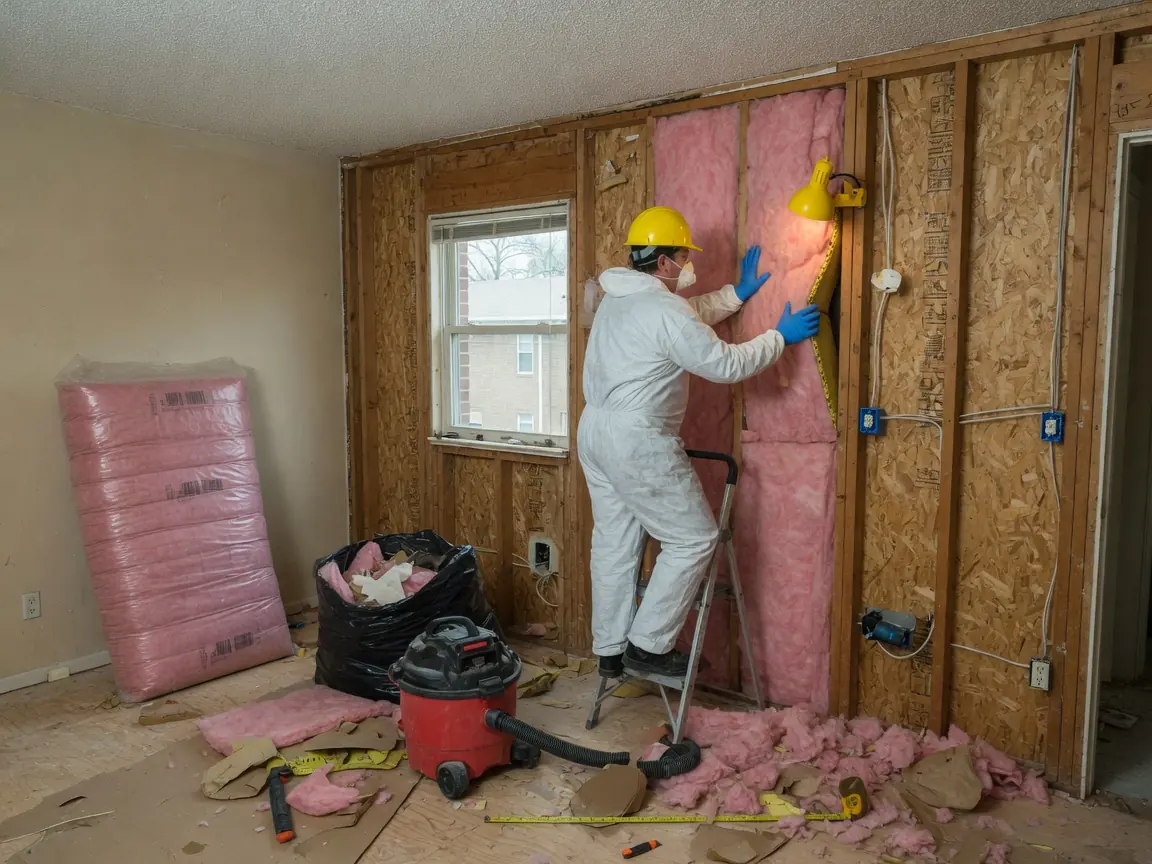
Exterior walls make up the largest surface area in most homes, and in Tulsa they take a beating from summer sun on west-facing walls and January winds out of the north. Fiberglass batts are the standard in many local builds, but they only perform when they are cut perfectly around every outlet, pipe and wire. Small gaps let air wash through the cavity, which is why walls can feel cold to the touch even when they are technically insulated.
Spray foam fills the entire stud cavity and seals the top plates, bottom plates, electrical boxes and window rough openings where most wall air leaks happen. That makes it a strong choice for new construction, room additions, garage conversions and gut remodels in Tulsa, when the walls are open and the cavities are easy to reach.
For existing finished walls, the options are different. Injection foam or dense-pack cellulose can be installed through small holes drilled from the inside or outside, then patched. We connect you with a local contractor who handles the method your walls need and gives you a free estimate in writing.
Tulsa tip
Have all electrical, plumbing and low-voltage wiring finished and inspected before foam goes in. Running new wire through cured closed-cell foam is difficult, so plan speaker, network and security wiring early.
When Spray Foam Wall Insulation Makes Sense
- ✓New construction or additions where stud cavities are open
- ✓Gut remodels and garage-to-living-space conversions
- ✓Walls that feel cold in winter or hot in the afternoon sun
- ✓Rooms with noticeable drafts around outlets and baseboards
- ✓Bedrooms or offices next to noisy streets where sound control matters
- ✓Exterior walls in shops, sunrooms or bonus rooms that are hard to heat and cool
Open-Cell vs Closed-Cell Foam in Walls
In a standard 2x4 wall, open-cell foam fills the 3.5-inch cavity for about R-13, which matches the R-value of a good batt but adds a real air seal and better sound dampening. It is the most affordable spray foam option for walls and is widely used in Tulsa homes.
Closed-cell foam reaches about R-6 to R-7 per inch, so 2 to 3 inches in a 2x4 wall yields roughly R-13 to R-20 while adding racking strength and a vapor retarder. It is a strong choice for walls that see moisture, shops and metal-framed buildings, or anywhere you want maximum R-value in a thin wall. A common middle ground is a thin layer of closed-cell foam followed by batts or blown insulation, often called flash and batt.
Wall Insulation Services We Offer
✓New Construction Walls
Open-cell or closed-cell foam installed after rough-in inspections and before drywall.
✓Additions and Remodels
Foam for room additions, garage conversions and gut renovations where walls are open.
✓Existing Wall Injection
Injection foam or dense-pack fill through small drilled holes in finished walls, then patched.
✓Flash and Batt Systems
A thin closed-cell air seal paired with batts or blown fill to balance cost and performance.
✓Sound Control Walls
Open-cell foam in interior walls around bedrooms, media rooms and home offices.
Wall Insulation Cost in Tulsa, OK
| Project | Typical Range | What Affects It |
|---|---|---|
| 2x4 wall, open-cell 3.5 in (per 1,000 sq ft of wall) | $1,600–$2,800 | Wall height, window count, prep time |
| 2x4 wall, closed-cell 2 in (per 1,000 sq ft of wall) | $2,000–$4,000 | Higher R per inch, vapor control |
| 2x6 wall, open-cell 5.5 in (per 1,000 sq ft of wall) | $2,500–$4,400 | Common in newer custom homes |
| Existing wall injection or dense-pack | Quoted per project | Drilling, patching and siding or drywall access |
Planning ranges based on typical market pricing per board foot. Your contractor's written quote after measuring the walls is the price that counts. Call for a free estimate on your project.
How It Works
- 1
Walkthrough and Measurement
The contractor measures wall area, confirms rough-in inspections are complete and recommends foam type and depth.
- 2
Masking
Windows, door openings, electrical boxes and floors are masked to protect against overspray.
- 3
Spraying and Trimming
Foam is sprayed into each cavity and open-cell foam is trimmed flush with the studs so drywall sits flat.
- 4
Inspection and Cleanup
Coverage and depth are checked, debris is removed, and the walls are ready for insulation inspection and drywall.