
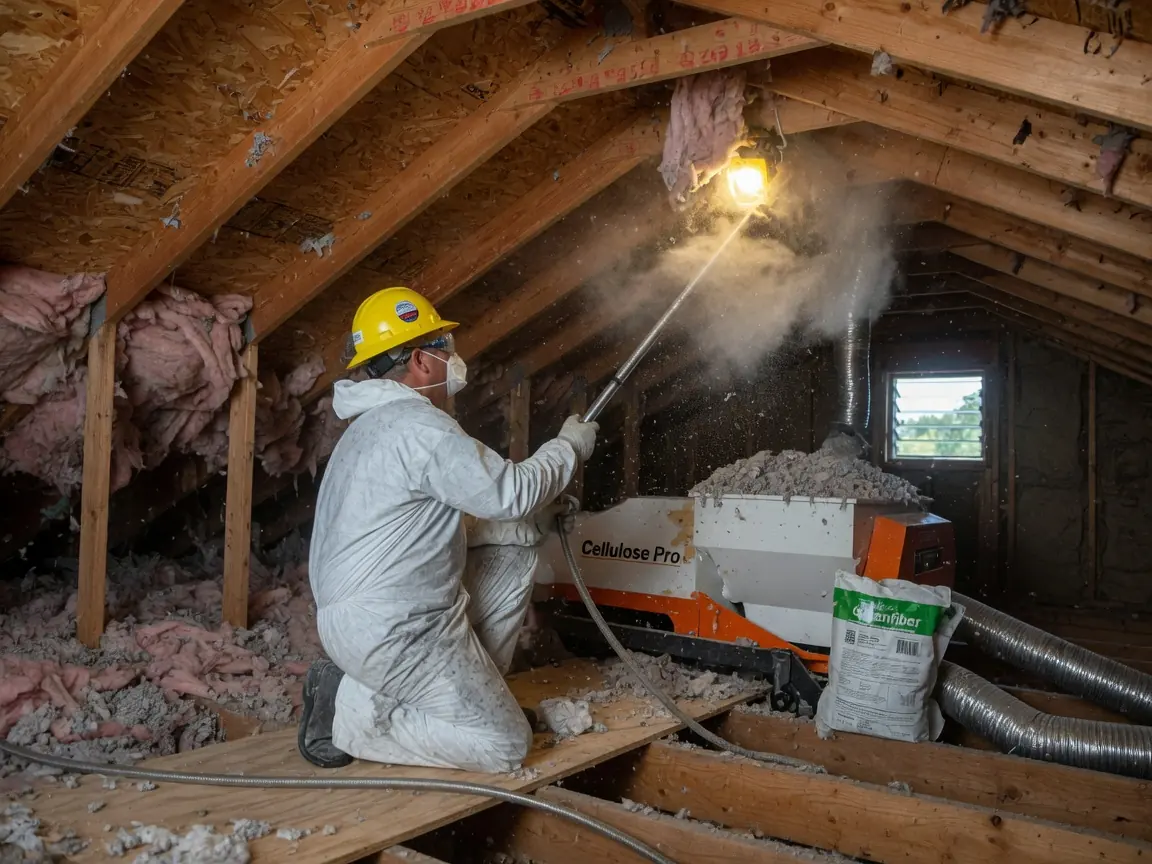
Many Tulsa homes, especially those built before the 1990s, have only 3 to 6 inches of insulation in the attic. That is well below the R-30 to R-60 the U.S. Department of Energy recommends for this climate. Blown-in insulation is the fastest and most affordable way to close that gap. Loose fiberglass or cellulose is blown across the attic floor with a machine, filling around joists, wiring and odd framing that batts cannot cover neatly.
Blown-in insulation works best when the ceiling is air sealed first. Sealing the top plates, wiring holes, plumbing stacks and attic hatch stops warm, humid air from moving through the insulation, so you get the full R-value you pay for. Baffles at the eaves keep the new insulation from blocking soffit vents.
Spray foam is not always the answer. If your attic is easy to reach and your goal is better comfort and lower bills on a sensible budget, blown-in is often the smart choice. We connect you with a local insulation contractor who checks your attic and gives you a free estimate in writing.
Tulsa tip
Before any insulation is blown in, check that recessed lights are rated IC (insulation contact) or properly covered, and that baffles are installed at the eaves so soffit vents keep working.
Signs You Need More Attic Insulation
- ✓You can see the tops of the ceiling joists in the attic
- ✓Insulation is patchy, compressed or pushed aside from past repairs
- ✓Upstairs rooms are hard to keep cool in summer
- ✓Heating and cooling bills keep rising
- ✓Ice dams or uneven roof frost in winter
- ✓Old insulation is damp, dirty or has signs of rodents
Fiberglass vs Cellulose Blown-In
Blown fiberglass is lightweight, does not absorb much moisture and settles very little over time. It generally provides about R-2.2 to R-2.7 per inch, so reaching R-38 takes roughly 14 to 17 inches. It is a good fit for most Tulsa attics and is less attractive to pests than some materials.
Cellulose is made from recycled paper treated with fire retardant. It is denser, around R-3.2 to R-3.8 per inch, and does a better job of slowing air movement through the insulation itself. It settles more than fiberglass, so installers blow it slightly deeper to account for that. It should be kept away from roof leaks because it absorbs water.
Blown-In Insulation Services We Offer
✓Attic Insulation Top-Up
Blowing new fiberglass or cellulose over existing insulation to reach R-38 or R-49.
✓Attic Air Sealing
Sealing the ceiling plane before insulation for the best performance.
✓Old Insulation Removal
Vacuum removal of damaged or contaminated insulation.
✓Baffles and Attic Hatch
Eave baffles and an insulated, weatherstripped attic hatch or stair cover.
✓Enclosed Cavities
Dense-pack blown insulation for closed walls and floors where appropriate.
Blown-In Insulation Cost in Tulsa, OK
| Project | Typical Range | What Affects It |
|---|---|---|
| Top-up to R-38, ~1,000 sq ft attic | $1,000–$2,000 | Existing depth, material type, access |
| Top-up to R-38, ~1,500 sq ft attic | $1,500–$3,000 | Most single-story Tulsa homes |
| Air sealing before blow-in | $500–$1,500 | Number of penetrations, attic access |
| Old insulation removal | $1.00–$2.00 per sq ft | Depth and contamination |
Planning ranges based on typical market pricing. Your contractor's written quote after an attic inspection is the price that counts. Call for a free estimate on your project.
How It Works
- 1
Attic Inspection
The contractor measures existing depth, checks ventilation, wiring, recessed lights and signs of moisture or pests.
- 2
Air Sealing and Prep
Penetrations are sealed, baffles are installed at the eaves, and the attic hatch is weatherstripped.
- 3
Blowing Insulation
Fiberglass or cellulose is blown evenly to the target depth, with depth markers placed across the attic.
- 4
Final Check
Depth markers are reviewed, the work area is cleaned, and you receive a record of the R-value installed.