
2026-10-01 · Spray Foam Insulation Pros Tulsa
Crawl Space Spray Foam Insulation: Stopping Moisture and Drafts in Tulsa Homes
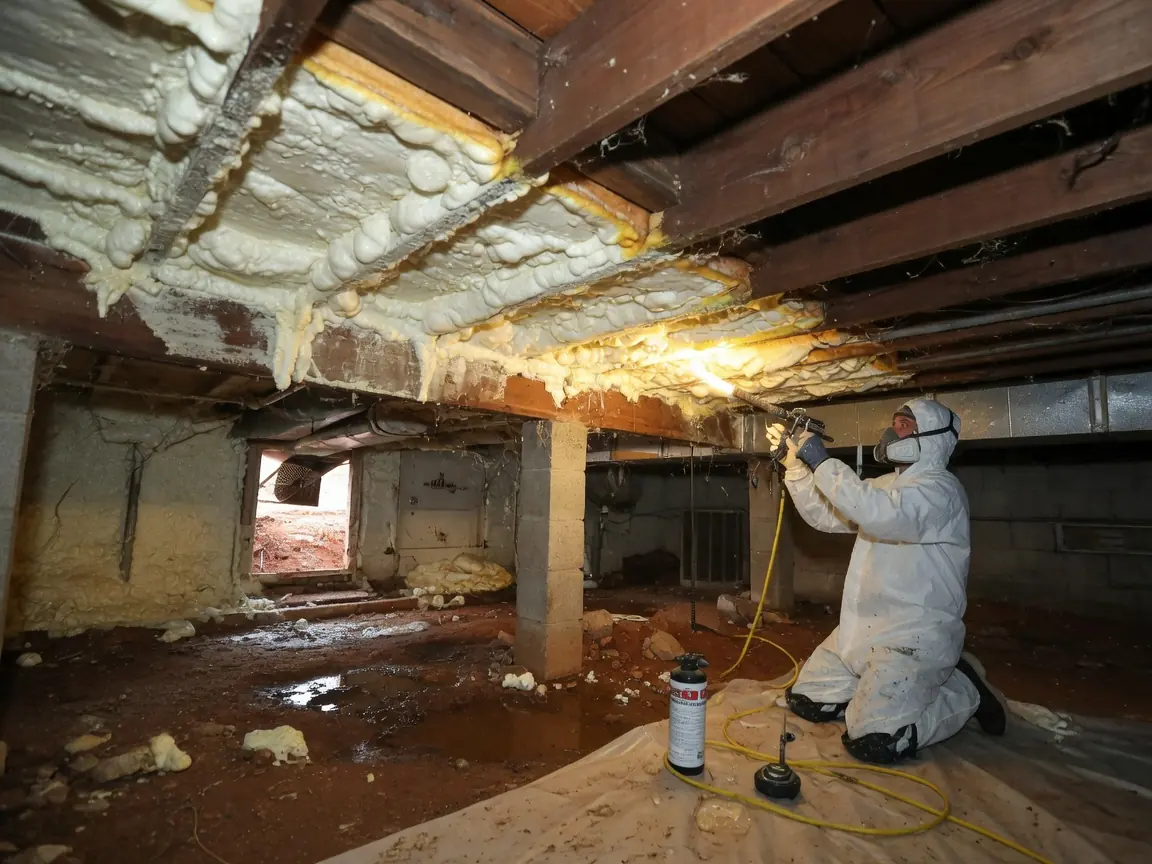
Crawl space spray foam insulation stops moisture and drafts in Tulsa homes by forming a continuous sealed layer that prevents humid air from entering and blocks cold air infiltration during winter months. In neighborhoods such as Maple Ridge and Greenwood, many homes built before 1970 feature vented crawl spaces with dirt floors and exposed joists that allow moisture from Tulsa County's frequent severe thunderstorms to rise into living areas. Closed-cell foam applied to the underside of the floor and rim joists creates an effective vapor retarder while also adding structural rigidity to older framing.
Tulsa Climate and Housing Stock Effects on Crawl Spaces
Warm humid summers in Tulsa drive high ground moisture levels that evaporate into crawl spaces, while cold winters pull heated air downward through unsealed floors in homes across Cherry Street and Brookside. Severe thunderstorms common in Tulsa County can push additional water under foundations in low-lying areas like Jenks and Bixby, accelerating wood rot and mold when vents remain open year-round. Older housing stock in Maple Ridge and Pearl District often lacks modern vapor barriers, making these spaces prime candidates for full encapsulation with spray foam rather than simple batt insulation. The combination of clay-heavy soils and fluctuating water tables in the region means any unsealed penetration allows consistent humidity migration that standard fiberglass cannot stop.
How Closed-Cell Foam Addresses Moisture Intrusion
Closed-cell spray foam expands to fill every gap around plumbing penetrations and rim joists, stopping the air exchange that carries moisture from the ground into the home. This creates a conditioned crawl space that maintains more stable temperatures year-round, reducing condensation on ductwork and pipes during humid summer periods. In areas like Utica Square and the Pearl District where homes sit on sloped lots, the foam also helps manage minor water movement by directing it away from wood framing. Homeowners in Greenwood report fewer musty odors once the space is sealed because the foam eliminates the stack effect that pulls damp air upward through floorboards.
Draft Reduction in Older Tulsa Neighborhoods
Drafts through crawl spaces become noticeable in winter when cold air from vents enters and rises through floor gaps in homes throughout Downtown Tulsa and Route 66 Historical Village. Spray foam applied at 2-inch minimum thickness on the floor decking and walls eliminates these pathways while adding an R-value layer that slows heat loss. The material adheres directly to concrete stem walls and wooden beams common in Bixby and Owasso construction, creating a monolithic seal that batts or loose-fill cannot match. Local installers note that sealing the rim joist area alone often cuts floor-level drafts by more than half in pre-1980 homes.
Practical Installation Steps for Local Conditions
Assessment begins with checking for standing water and wood damage, followed by installing a 6-mil vapor barrier on the dirt floor before foam application. Technicians then spray closed-cell foam on the underside of the subfloor and up the walls to at least 18 inches above grade in homes across Broken Arrow and Glenpool. Proper ventilation of any remaining combustion appliances and dehumidifier placement complete the job to maintain 45-55% relative humidity. See the details on our crawl space insulation page for how these steps adapt to specific Tulsa County soil conditions.
Selecting the Right Foam Type for Tulsa Homes
Closed-cell foam is preferred over open-cell in crawl spaces because it provides higher R-value per inch and inherent moisture resistance needed for Tulsa's variable water table. Open-cell may suit drier, above-grade applications but allows vapor transmission that can worsen condensation in humid summers. Review the comparison in our article on closed cell vs open cell spray foam insulation to match product choice to your home's specific exposure. The denser closed-cell material also adds minor structural support to aging floor joists common in Maple Ridge and Utica Square properties.