
2026-10-01 · Spray Foam Insulation Pros Tulsa
How Much Can Spray Foam Insulation Lower Your Tulsa Energy Bills?
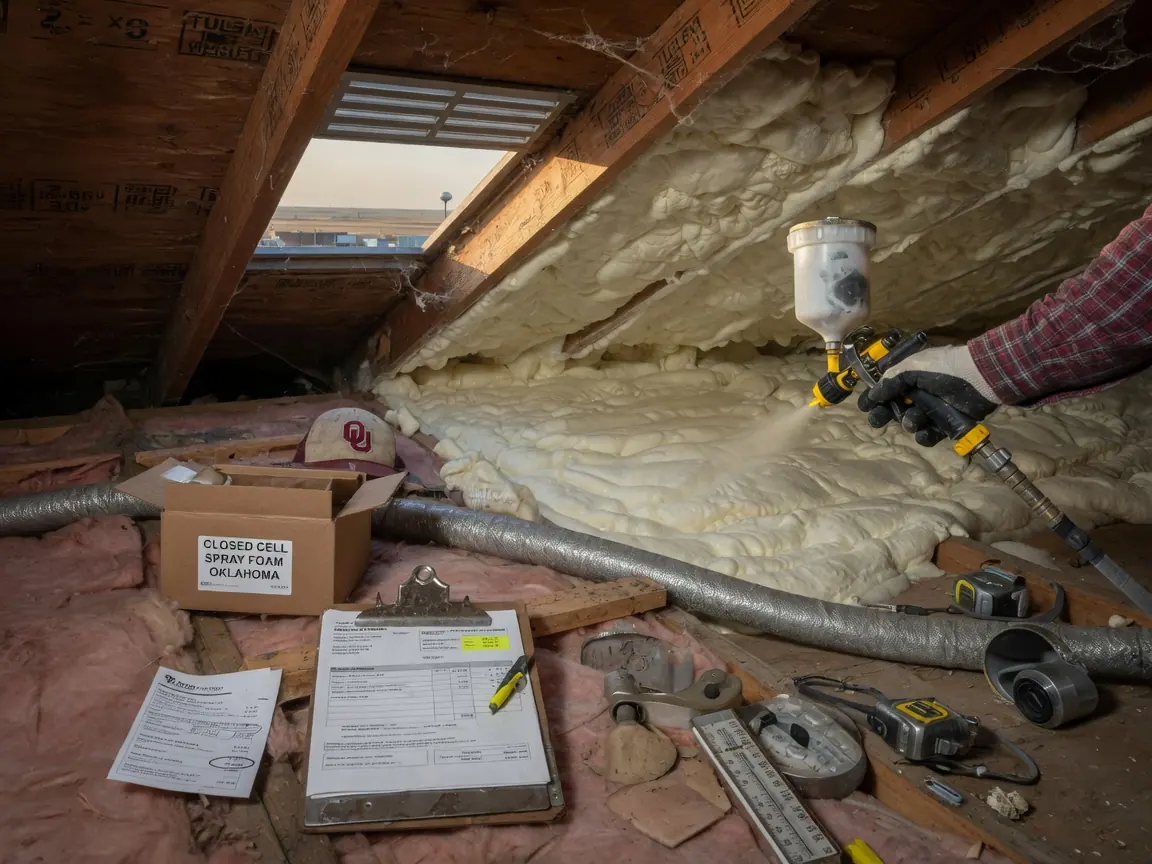
Spray foam insulation can lower your Tulsa energy bills by $400–$1,200 annually for most single-family homes. This range holds for properties in neighborhoods such as Cherry Street, Maple Ridge, and the Pearl District where older construction meets Tulsa County's mix of warm humid summers and cold winters with frequent severe thunderstorms.
How Tulsa's Climate Drives Energy Use
Tulsa's warm humid summers push air conditioning systems hard from May through September while cold winters from December to February drive up heating loads. Frequent severe thunderstorms add moisture concerns that affect how insulation performs in attics and crawl spaces across Downtown Tulsa and Greenwood. Homes built before 1980 in Brookside and Utica Square often lack adequate sealing, allowing conditioned air to escape during both extremes. Spray foam creates an air barrier that directly counters these seasonal swings, reducing the runtime of HVAC equipment in Tulsa County homes. The result shows up on utility statements as lower kilowatt-hour and therm usage once the material is installed and the home reaches equilibrium with local weather patterns.
Savings by Home Type and Location
Larger homes in Bixby and Owasso with 2,500 square feet or more see the upper end of savings because they have more surface area exposed to temperature swings. Smaller bungalows in Maple Ridge and the Pearl District often realize 30-40% reductions since their compact footprints require less material to seal. Jenks properties near the river face higher humidity loads that closed-cell foam handles especially well by blocking moisture intrusion during thunderstorms. Broken Arrow homes with slab foundations benefit from under-slab applications that limit heat loss into the ground. Actual dollar figures depend on current insulation levels and HVAC efficiency, but the pattern across Tulsa County remains consistent once the air barrier is complete.
Comparing Spray Foam to Other Insulation Options
Homeowners comparing options often review Closed Cell vs Open Cell Spray Foam Insulation: Which Is Right for Your Tulsa Home? to match product type to their specific exposure. Open-cell foam works well in attics of Cherry Street homes where sound control matters more than maximum R-value. Closed-cell applications suit crawl spaces in Owasso where moisture from severe weather is a recurring issue. Attic Insulation projects in Bixby frequently combine spray foam with existing materials to reach target R-values without full removal. These choices affect long-term bill reductions because the right product maintains performance through repeated freeze-thaw cycles common in Tulsa County.
Tracking and Verifying Your Results
After installation, monitor electric and gas statements for 12 months to capture both summer and winter performance. Many Tulsa homeowners notice the largest drops in July and August when cooling loads peak, followed by another measurable reduction in January. Factors such as new windows, HVAC upgrades, or changes in occupancy can influence the final percentage, so isolating the insulation effect requires steady usage patterns. Properties in the Greenwood and Route 66 Historical Village areas often show quicker payback because their older envelopes had more leakage points before treatment. Consistent tracking confirms the $400–$1,200 annual range holds across varied home ages and sizes in the county.